
jamietorres94
New member
- Joined
- Nov 11, 2026
- Messages
- 2
- Points
- 1
Hideproxy.io is a peer-to-peer proxy platform that effectively supports users of antidetect browsers such as AdsPower, GoLogin, Hidemium and Incogniton. Proper proxy setup largely determines the stability and safety of a multi-profile system. Many failures come from choosing the wrong type of proxy or skipping important checks. The practical checklist below helps users build systematic processes and minimize risks.
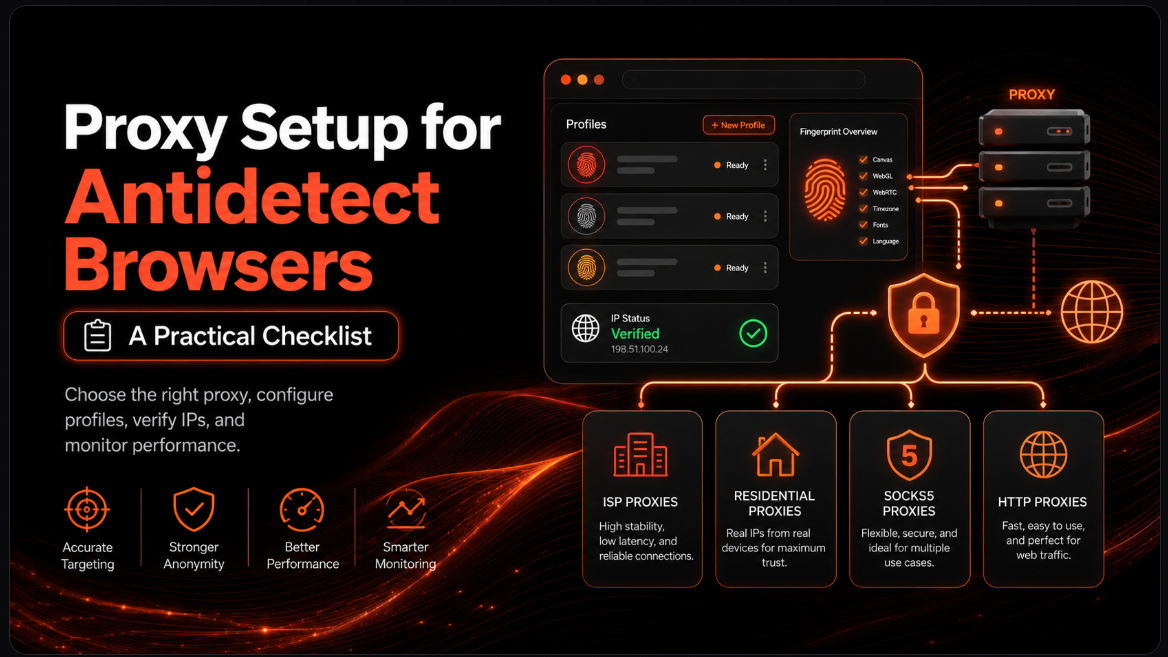
The first step is choosing the right type of proxy. There are four main groups to consider carefully. Residential Proxy uses IP from real residential devices, providing the highest reliability and suitable for most important accounts. ISP Proxy stands out for its stability, low latency, and reliable connection. SOCKS5 is flexible, supporting many applications and protocols, making it ideal when you need to run additional tools outside of the browser. HTTP Proxy is simple, fast, suitable for common web tasks. Hideproxy.io provides a full range of these types, especially strong in Residential and ISP thanks to its peer-to-peer network.
After choosing the appropriate proxy type, the next step is to configure the profile. Each profile on the antidetect browser should be assigned a separate proxy, and set up independent fingerprints including Canvas, WebGL, WebRTC, Timezone, Fonts and Language. Synchronization between IP and fingerprint is very important. If the IP is in the US but the timezone is still in Europe, the risk of being discovered will increase. Hideproxy.io supports selecting the correct country, helping users easily match geographical location with the rest of the profile parameters.
Checking IP after configuration is a mandatory step that should not be skipped. Users should use various testing tools to confirm country, detect DNS leak or WebRTC leak. On the antidetect browser interface, take advantage of the proxy test function to see the actual Connected, latency and IP status. If the results do not match your expectations, you should change the IP immediately from Hideproxy.io instead of continuing to use it.
Performance monitoring plays a key role in long-term operations. A good proxy should not only be clean, but should also remain stable over hours or days. Users should monitor ping, connection success rate and promptly replace when detecting signs of slowness or instability. Hideproxy.io allows easy management of proxy lists, supports both static and rotating, helping to flexibly adjust according to each work stage.
In addition to the technical steps, the checklist also includes practical operating principles. Do not use the same proxy for too many profiles. Prioritize static residential for high-value accounts and rotating for secondary profiles or short-term tasks. Regularly review the configuration as the mission or target market changes. Combining quality proxies from Hideproxy.io with a regular monitoring routine will help minimize problems and improve overall efficiency.
In fact, people who follow this checklist often significantly reduce the rate of accounts being checkpointed, timed out, or linked. Not only do they choose the right proxy, but they also control the entire chain from configuration to monitoring. Hideproxy.io with its clean residential IP source, multi-country support, and good integration has become a trusted choice in this setup process.
In short, setting up a proxy for an antidetect browser is not complicated if you follow the right steps: choose the right proxy type, configure the profile strictly, check the IP thoroughly and monitor performance continuously. Hideproxy.io serves as a solid foundation to help users effectively carry out checklists, thereby building a more secure, stable and sustainable multi-account system in the long term.
https://hideproxy.io/blog/user-guide/proxy-setup-for-antidetect-browsers-a-practical-checklist
The first step is choosing the right type of proxy. There are four main groups to consider carefully. Residential Proxy uses IP from real residential devices, providing the highest reliability and suitable for most important accounts. ISP Proxy stands out for its stability, low latency, and reliable connection. SOCKS5 is flexible, supporting many applications and protocols, making it ideal when you need to run additional tools outside of the browser. HTTP Proxy is simple, fast, suitable for common web tasks. Hideproxy.io provides a full range of these types, especially strong in Residential and ISP thanks to its peer-to-peer network.
After choosing the appropriate proxy type, the next step is to configure the profile. Each profile on the antidetect browser should be assigned a separate proxy, and set up independent fingerprints including Canvas, WebGL, WebRTC, Timezone, Fonts and Language. Synchronization between IP and fingerprint is very important. If the IP is in the US but the timezone is still in Europe, the risk of being discovered will increase. Hideproxy.io supports selecting the correct country, helping users easily match geographical location with the rest of the profile parameters.
Checking IP after configuration is a mandatory step that should not be skipped. Users should use various testing tools to confirm country, detect DNS leak or WebRTC leak. On the antidetect browser interface, take advantage of the proxy test function to see the actual Connected, latency and IP status. If the results do not match your expectations, you should change the IP immediately from Hideproxy.io instead of continuing to use it.
Performance monitoring plays a key role in long-term operations. A good proxy should not only be clean, but should also remain stable over hours or days. Users should monitor ping, connection success rate and promptly replace when detecting signs of slowness or instability. Hideproxy.io allows easy management of proxy lists, supports both static and rotating, helping to flexibly adjust according to each work stage.
In addition to the technical steps, the checklist also includes practical operating principles. Do not use the same proxy for too many profiles. Prioritize static residential for high-value accounts and rotating for secondary profiles or short-term tasks. Regularly review the configuration as the mission or target market changes. Combining quality proxies from Hideproxy.io with a regular monitoring routine will help minimize problems and improve overall efficiency.
In fact, people who follow this checklist often significantly reduce the rate of accounts being checkpointed, timed out, or linked. Not only do they choose the right proxy, but they also control the entire chain from configuration to monitoring. Hideproxy.io with its clean residential IP source, multi-country support, and good integration has become a trusted choice in this setup process.
In short, setting up a proxy for an antidetect browser is not complicated if you follow the right steps: choose the right proxy type, configure the profile strictly, check the IP thoroughly and monitor performance continuously. Hideproxy.io serves as a solid foundation to help users effectively carry out checklists, thereby building a more secure, stable and sustainable multi-account system in the long term.
https://hideproxy.io/blog/user-guide/proxy-setup-for-antidetect-browsers-a-practical-checklist